
Orange Essential Oil
Young Living Orange essential oil has a bright, sweet citrus aroma that freshens air, supports a low-tox home, and helps remove sticky residue from hard surfaces.
Orange essential oil is a simple way to bring a fresh, clean feeling into your home or workspace. Cold-pressed from orange peels, this oil has a naturally sweet citrus aroma that feels cheerful and light. Many people choose Young Living Orange essential oil to help refresh rooms, neutralize stale odors, and support a low-tox lifestyle.
When diffused, Young Living Orange essential oil helps cleanse the air and create an uplifting atmosphere. It works well in kitchens, offices, and shared spaces where you want things to smell clean without harsh chemicals. Because it blends easily with other citrus and spice oils, it is also a favorite for seasonal and everyday diffuser blends.
Young Living Orange essential oil is also valued for natural cleaning support. It can help loosen sticky residue and remove adhesives from non-porous surfaces. Adding a few drops to homemade cleaning sprays boosts cleaning power while leaving behind a fresh scent instead of synthetic fragrance.
This oil is a great option for beginners who want a versatile essential oil that fits into daily routines. From diffusing to cleaning, Young Living Orange essential oil offers a simple way to reduce toxins while keeping your space bright and fresh.
Product Profile
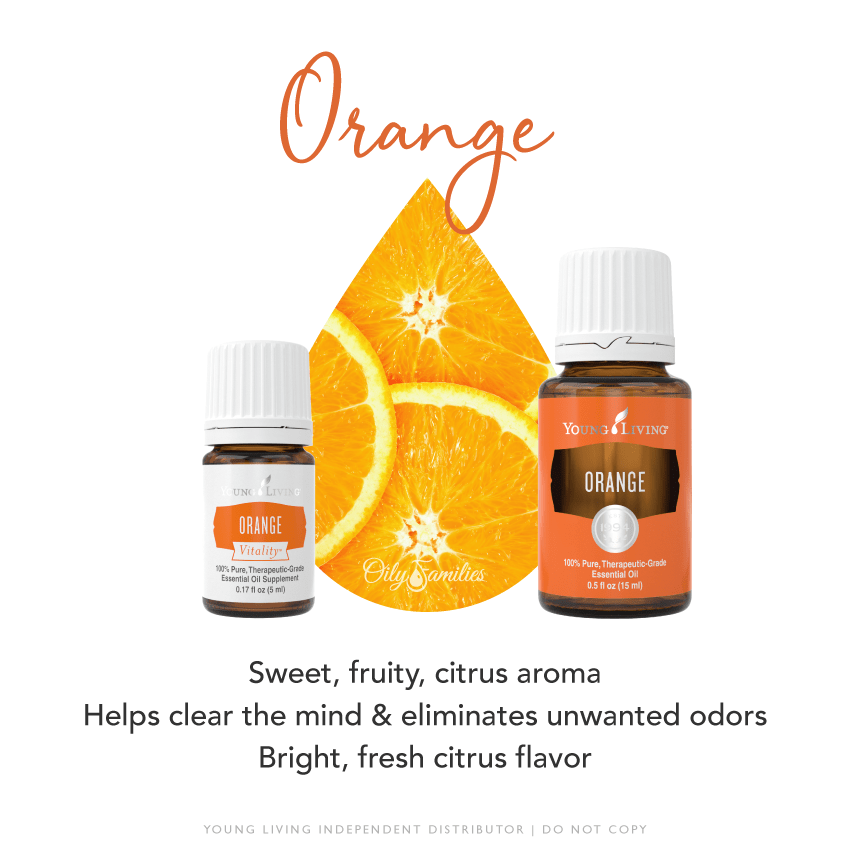
- Has a sweet, uplifting, citrus aroma
- May help reduce the appearance of blemishes when applied topically
- Removes sticky adhesives and residues from non-porous surfaces
- Neutralizes musty, smoky, and stale odors
- May support overall wellness when taken internally*
Orange essential oil for low tox home
Many people want a cleaner home without harsh chemicals or strong artificial smells. Young Living Orange essential oil helps address this by offering a plant-based option for freshening air and supporting natural cleaning. Its bright aroma helps neutralize musty or stale odors, making spaces feel cleaner right away. When added to DIY cleaners, it can help remove sticky residue without relying on synthetic products. This makes it easier to maintain a low-tox environment at home or work.
- Diffuse to freshen air and lift mood
- Add to DIY surface cleaning sprays
- Use to remove sticky residue on surfaces
- Blend with other citrus oils for scent
- Freshen shared spaces like offices
Refresh your space the natural way. Add Young Living Orange essential oil to your home today and enjoy a cleaner, brighter, low-tox environment.
Product Use & Tips
Suggestions from Young Living
-
Topical: Apply 2–4 drops directly to desired area. Dilution is not required, except for the most sensitive skin. Use as needed.
-
Aromatic: Diffuse up to 30 minutes 3 times daily.
-
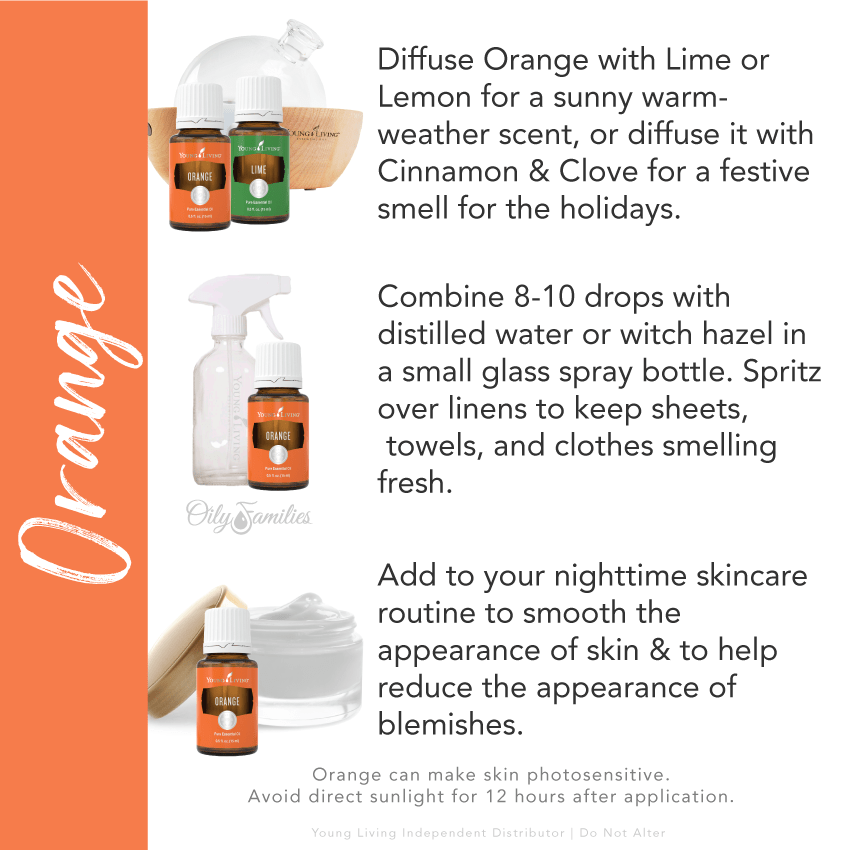
Diffuse Orange with Lime, Lemon, or Tangerine oil for a sunny, refreshing aroma, or with Cinnamon and Clove oils for a cozy, festive smell.
-
Add Orange oil to your home cleaning solutions for a boost of cleaning and odor-neutralizing power.
-
Add it to your nighttime skin care routine to help reduce the appearance of blemishes and make your skin look smoother.
-
Combine 8–10 drops with distilled water or witch hazel in a small glass spray bottle and spritz over linens to freshen your sheets, towels, and clothes.
-
Add 1–2 drops of Orange Vitality oil to a vegetarian gel capsule and take daily for general wellness support.*
-
Add Orange Vitality oil to a smoothie or green drink to enjoy its sweet, citrus flavor.
Related to this Product

10 Essential Oil Uses We Bet You’ve Never Tried

14 Things Orange Essential Oil Lovers Have to Try!

20 Essential Oils Practically Made for Summer

6 Straight Up Clever Ways to Use Spearmint Essential Oil

7 Essential Oils to Try Before You Lose Your Chill

8 Neroli Self-care Tips You’ve Got to Try

9 Next-level Benefits of Black Pepper Essential Oil
All About Orange

An Essential Oil User’s Guide to Aromatherapy

An Insider’s Guide to Creating Diffuser Blends
- Diffusing Notes
- Ultrasonic Diffusers
- Atomizing Diffusers
- Cleaning Your Diffuser
- Aromatherapy
- Using Essential Oils Safely

Diffusing Notes
These are approximate drops. Adjust recipes to your needs. If a recipe is too strong for you, add fewer drops. Do you need more? Just add more, but no more than 8-12 drops for all of our diffusers with the exception of the Aria diffuser which requires 15-25 drops.
Tip: When you first begin diffusing, start with less essential oil than listed in the recipes and build to more as desired. You should give your body time to adjust to the essential oils. Almost all the Young Living diffusers are ultrasonic which provides a cool-mist humidifier along with the essential oils. These diffusers are safe to run all day. Pay attention to the size of the room because the size will impact the intensity of diffusing. Nebulizers and atomizers are different than ultrasonic diffusers because they do not use water. For these, note the time limit for diffusing stated on each individual oil bottle.
Ultrasonic Diffusers
Ultrasonic diffusers work by using vibrations to break down water and essential oils into tiny particles, creating a fine mist that is released into the air. Inside the diffuser, there’s a small disc that vibrates rapidly, usually at ultrasonic frequencies (beyond what humans can hear). This vibration agitates the water and oil mixture, breaking it into micro-droplets that are then dispersed as a mist. This mist carries the pleasant aroma of the essential oils and tiny water particles, helping to humidify the air and spread the fragrance throughout a room. Ultrasonic diffusers are popular for their ease of use, quiet operation, and ability to provide both aromatherapy benefits and a visually appealing ambiance.

Atomizing Diffusers
An atomizing diffuser works by breaking essential oils into a fine, breathable mist without using heat or water. Instead of diluting the oil, this type of diffuser keeps the aroma strong and pure. Inside the device, a small air pump or pressurized airflow pushes air through a narrow tube. As the air moves quickly past the oil source, it creates a vacuum effect that pulls the essential oil upward. The oil then passes through a tiny nozzle that turns it into micro-sized particles. These particles are released into the air as a dry, concentrated mist.
Because no water is used, the scent stays true to the oil’s natural chemistry. The mist also disperses more quickly, allowing the room to fill with aroma in just a few minutes. Atomizing diffusers typically offer adjustable intensity settings so users can choose a light or strong scent based on the space. They are also efficient, using only a small amount of essential oil while still producing a powerful aroma.
This method is ideal for people who want clean, direct aromatherapy without added moisture or heat. It provides a simple, effective way to enjoy essential oils in their purest form.
Cleaning Your Diffuser
- Always turn off and unplug the diffuser prior to cleaning.
- To ensure proper performance, clean the ultrasonic plate and lid after each use.
- If essential oil begins to build up on the ultrasonic plate, gently wipe it off using a cotton swab dipped in rubbing alcohol.
- If essential oil begins to build up on the lid, gently wipe it off using mild soap and water only.
- Never use a corrosive detergent to clean the ultrasonic plate or damage will occur.
- Periodically check under the diffuser to keep the fan intake free of debris.
- Debris can be removed by blowing on the fan intake opening or wiping with a clean, dry cloth. (Do not use aerosol sprays, solvents, or abrasives to clean the plastic housing.)
- When not in use, clean the diffuser and store dry. Replacement ultrasonic plates can be purchased from Young Living.
Aromatherapy
When odorant molecules attach to odorant receptors, your body responds by sending electrical impulses into your brain. This causes different physiological reactions depending on the aromas detected.
The sense of smell has a profound impact on your emotions and inner desires. Those scents can set the mood or bring up memories before you are even aware of it.
Aromas impact your body and they can set the mood and atmosphere in any environment.
The sense of smell is directly connected to the limbic lobe of your brain, also known as the emotional control center. The limbic lobe plays a big role in your mood, memory, behavior, feelings, and emotions, and it is connected to the olfactory bulb in the nose.
How to Use Essential Oils
Aromatically, Topically, Internally & Safely
You just purchased a bundle, kit, or collection of essential oils. Now you’re overwhelmed by how to use them. We’ve all been intimidated by how to use essential oils. With a little practice and this simple guide, you’ll be an expert in no time.
This video covers how to use essential oils:
• Aromatically
• Topically
• Internally
• Safely
How to Apply Essential Oils - Three Main Methods
Stumped on how to apply your essential oils? How you apply an oil depends on what benefit you want to get out of it. Different oils offer different benefits, depending on how and where you apply them. So, before using any new essential oil, be sure to check that oil’s uses and benefits and read any labels and instructions that come with it. If you have questions or concerns, check with your healthcare provider.
Using Essential Oils Aromatically
Let’s start with the hallmark way to use essential oils: aromatically. All essential oils feature a signature aroma you can smell and inhale for various effects. One oil’s crisp scent can invigorate you when you need a midday pick-me-up. Another’s soothing aroma can help you unwind after a tough day. You can use essential oils aromatically by simply opening the bottle and inhaling its aroma. They can also be applied topically as a personal fragrance, but always dilute them with a carrier oil, which is a plant-derived oil like coconut or almond oil. Dilute a few drops of essential oil with your carrier oil and then rub it into your palms and inhale or dab some behind your ear or on your neck. You can also use a diffuser to disperse the essential oil into the air.
Using Essential Oils Topically
Another favourite way to apply essential oils is topically, where you allow the oil to absorb into your skin. As mentioned before, always dilute oils with a carrier oil before you apply them topically. Topical oils can become part of a massage or added to your preferred lotion, moisturizer or other personal care product. Some oils, particularly those from the citrus family, can cause photosensitivity. A carrier oil is a plant-derived oil like coconut and almond oil that can be used to dilute an essential oil’s concentration.
Using Essential Oils Internally
If you think an oil smells terrific, wait until you taste it! You can season your favourite dish or flavor a drink with certain grades of essential oils. Ingesting oils lets you savor all their savory, herbaceous, spicy, fruity potential. The simplest ways to take essential oils internally is to add them to a glass of water, take them in a capsule or use them as seasoning. Start off with a small amount. A little goes a long way, and even a single drop might overpower your recipe. One recommendation is to dip a toothpick in the oil and stir that little bit in as a starting point. Of course, before you use any oils internally, make sure the oil is safe to ingest. Unless it specifically says on the label that it’s safe for ingestion, assume it’s safe for external use only.
Diffusing Blends with These Oils
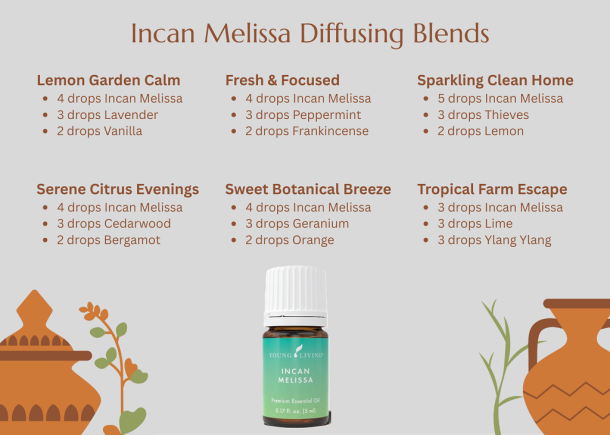
Incan Melissa Diffusing Blends
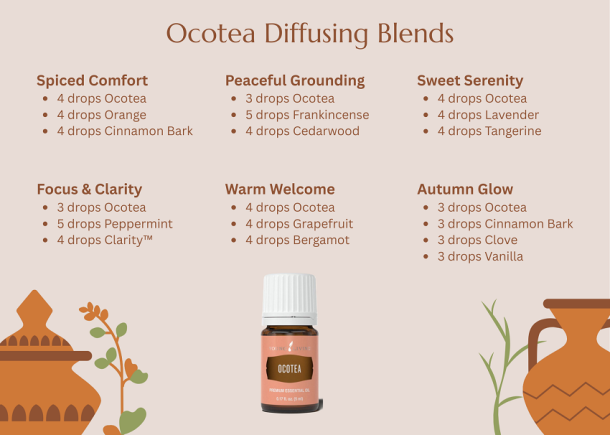
Diffusing with Ocotea Essential Oil

Spice up Your Life with 5 uses for Cassia Essential Oil

Get Up and Go Motivation Diffuser Blends

Essential Oil Diffuser Recipes—for Every Mood
Related Areas

Can essential oils expire? Understanding essential oil oxidation

Why Patents Matter to Essential Oils

How to Store Essential Oils: Get the Most Out of Each Drop

What are “hot” Oils and How Can I Use Them?

Why Should You Put Essential Oils on Your Feet?

The Science Behind Aromatherapy

Which Type of Diffuser is Right for You?

The Story Behind Essential Oil Prices
* The statements and information regarding these products have not been evaluated by the FDA. Young Living products are not intended to diagnose, treat, cure, or prevent disease. Most of the product information describing Young Living products is directly from Young Living Essential Oils, LC, and can be found online at YoungLiving.com
See more about toxins in your home.
